Author: Fritz Loho

  • How Can You Help Your Year 1 Child Understand Math Data Without the Tears?

    How Can You Help Your Year 1 Child Understand Math Data Without the Tears?

    Ever wonder why your child finds math homework exhausting but can spend hours meticulously sorting their LEGO collection or trading cards? The difference isn’t their ability—it’s the context. Many parents assume that children “just aren’t math kids” if they struggle with abstract numbers on a page. In reality, math becomes a battle when it feels disconnected from their world.

    Statistics and Probability don’t have to be intimidating. In Year 1, we aren’t looking for complex calculus; we are teaching children to observe, record, and interpret their environment. The secret to mastering this is moving from the abstract to the concrete: teaching them that data is simply a story told in numbers.

    Why Tally Marks are a Game Changer

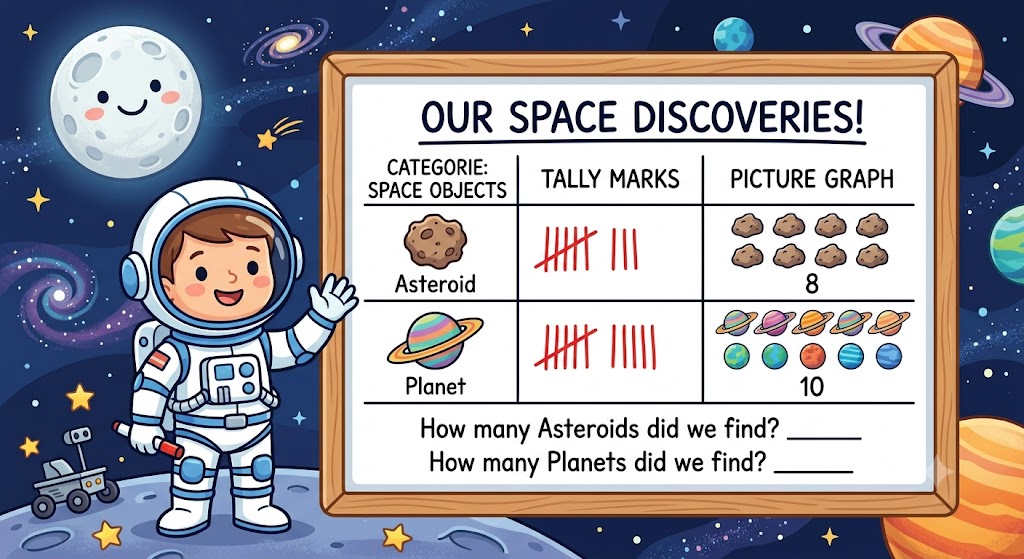
    Before children can graph data, they must learn to gather it. Tally marks are the ultimate tool for this. They are simple, fast, and visual.

    When your child records what they see, they are actively participating in the math. Encourage your child to use tally marks for everyday observations. How many red cars pass the house? How many blue birds are in the tree? When they create a “tally list,” they are building the foundation for data literacy.

    From Tallies to Pictures: Making Math Visual

    Once the data is gathered, it needs to be organized. This is where picture graphs come in. A picture graph turns those abstract tally marks into a clear visual representation.

    Strategy Tip: Show your child that one symbol equals one item. This is the “one-to-one correspondence” rule. If you have 3 tally marks for “Stars,” your graph should have 3 star stickers or drawings. It turns a list into a picture, making it instantly readable.

    Start Your Math Journey Today

    Don’t wait for the next homework assignment to make math engaging. At EinstyAI, we transform dry curriculum outcomes into stories that stick. By aligning math practice with topics your child actually cares about, we turn the “homework battle” into a moment of discovery.

    Stop fighting the curriculum. Start using stories that make math feel like play. Visit us at EinstyAI to find custom-tailored resources designed to help your child succeed.

    Practice Questions

    Space Exploration: Data Gathering Worksheet

    Welcome, Space Cadet! Today, we are organizing our findings from our mission to the galaxy. Help us categorize what we found in space.

    Question 1 (Tallying)

    Commander Zog found some space rocks. He made a tally mark for every rock he found.

    (IIII)

    How many space rocks did he find?

    A) 3

    B) 4

    C) 5

    D) 6

    Question 2 (Reading the Graph)

    We looked at the spaceships parked at the base:

    • Rocket A: 2 spaceships
    • Rocket B: 4 spaceships
    • Rocket C: 1 spaceship

    If you were to draw this on a picture graph, which rocket would have the most pictures?
    A) Rocket A
    B) Rocket B
    C) Rocket C
    D) None of them

    Question 3 (Connecting Data)

    You have a list of aliens spotted: 3 Green Aliens and 2 Purple Aliens. Which picture graph shows this correctly?

    A) 3 Green circles and 3 Purple circles

    B) 2 Green circles and 3 Purple circles

    C) 3 Green circles and 2 Purple circles

    D) 5 Green circles and 0 Purple circles

  • How Can I Help My Year 5 Student Master the Cartesian Plane and Perimeter?

    How Can I Help My Year 5 Student Master the Cartesian Plane and Perimeter?

    Why does your child view math problems as an unsolvable maze rather than a blueprint to build their own world? Many parents assume that math anxiety is an inherited trait—that some kids are simply “not math people.” This is a myth. When students struggle with Year 5 Measurement and Space concepts, it is rarely because they lack ability. It is because the abstract concepts feel disconnected from reality.

    The Problem: Math in a Vacuum

    In Year 5 (Stage 3), students are introduced to the Cartesian plane and the calculation of perimeters for composite shapes. Without context, a grid of coordinates and a series of lines are just numbers on a page. This is where disengagement starts. Children do not learn mathematics by staring at textbooks; they learn by interacting with their environment.

    The Solution: Building with Coordinates

    The Cartesian plane is essentially a map. If your child plays Minecraft, they are already using coordinate geometry. Every block placed in a Minecraft world occupies a specific x and y coordinate. When we shift the focus from rote memorization to spatial reasoning, the math becomes intuitive.

    To teach perimeter of composite shapes, stop asking for “perimeter” and start asking for the “fencing required to secure a base.” A composite shape is just two simple rectangles joined together. The secret trick is to treat the shape like a room layout. Instead of guessing the missing sides, break the complex shape into two smaller, simple rectangles. Calculate their perimeters individually, then subtract the shared wall. This prevents the common trap of counting interior lines.

    Master the Grid Today

    If your child struggles with math, stop the “drill and kill” homework sessions. Connect the curriculum to the games they love. When they calculate the perimeter of a virtual base, they aren’t just doing math; they are engineering. Math is not a battle to be won; it is a tool to be used.

    Practice Questions

    Theme: The Minecraft Architect Challenge

    Question 1: The Diamond Coordinates

    Steve is placing a rare Diamond Block on his base grid. The base starts at (0,0). Steve places the block exactly 3 units to the right and 4 units up from the starting point. What are the coordinates of the Diamond Block?

    A) (4, 3)

    B) (3, 4)

    C) (3, 3)

    D) (4, 4)

    Question 2: Protecting the Base

    Steve builds a rectangular crafting room that is 5 metres long and 4 metres wide. What is the total perimeter of this room?

    A) 9 metres

    B) 18 metres

    C) 20 metres

    D) 15 metres

    Question 3: The L-Shaped Lookout

    Steve builds an L-shaped lookout tower. The horizontal bottom is 6 metres wide. The vertical left side is 8 metres high. The top horizontal arm is 2 metres, and the vertical drop is 4 metres. The remaining two sides close the shape. Assuming all angles are right angles, what is the total perimeter of the lookout?

    A) 20 metres

    B) 24 metres

    C) 28 metres

    D) 32 metres

  • How do I explain area and perimeter to my Year 4 child without the tears?

    How do I explain area and perimeter to my Year 4 child without the tears?

    Is your kitchen table the nightly battleground for math homework? You are not alone. Many parents search for ways to simplify geometry, often assuming that math homework is naturally a battle. Here is the truth: Math doesn’t have to be a struggle. When you shift the mindset from “solving problems” to “solving stories,” the anxiety disappears.

    Perimeter vs. Area: The Simple Distinction

    Children often confuse perimeter and area because both involve shapes. To keep them clear, use the Fence and Grass analogy:

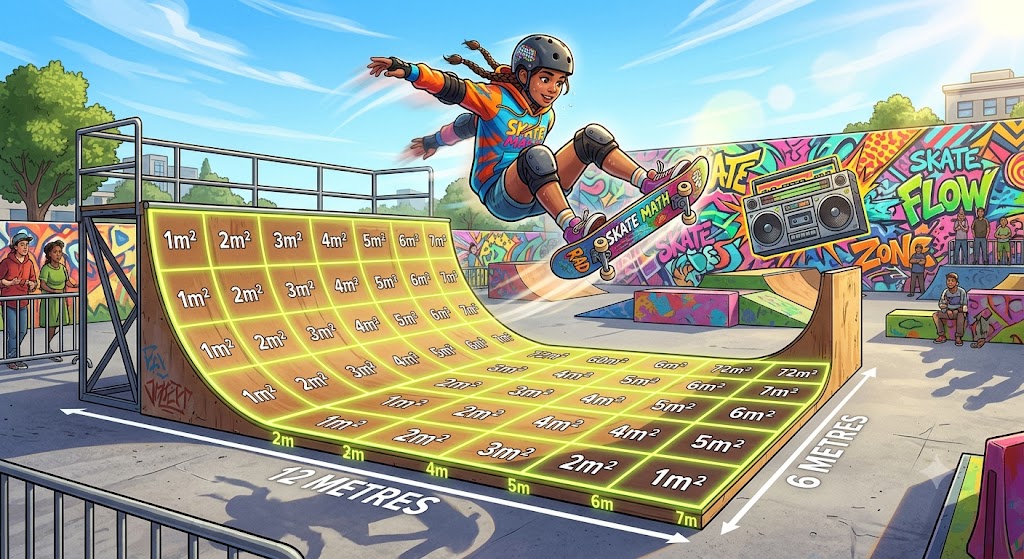
    • Perimeter is the fence. It is the distance around the edge. If your child were a skater, the perimeter is the metal rail they ride along.
    • Area is the grass. It is the space inside the shape. If your child is skating, the area is the concrete slab they roll across.

    The “Border and Fill” Trick

    To help students master these concepts, teach them to physically trace the shape before calculating.

    1. Trace the Border: Use a finger to outline the object. This is for Perimeter (measured in centimetres or metres).
    2. Fill the Space: Use a shading motion to cover the surface. This is for Area (measured in square centimetres or square metres).

    When students encounter a question, ask them: “Are we counting the fence, or are we tiling the floor?” This simple check prevents the most common mistake: adding the length and width instead of calculating the space inside.

    Bring Math to Life

    The key to deep learning is context. If your child loves skateboarding, don’t force them to measure abstract rectangles in a workbook. Instead, have them design a dream skate park. Ask them to calculate the perimeter of a new ramp for safety fencing, or the area of concrete needed for a flat-bank section. By connecting abstract concepts like square centimetres to real-world objects, you move them from rote memorization to true understanding.

    If you are looking for ready-to-use math stories that turn these concepts into engaging adventures, check out EinstyAI. We help students conquer math anxiety by transforming dry curriculum requirements into compelling stories. Stop fighting over homework and start exploring.

    Practice Questions: The Skate Park Challenge

    1. The Grind Rail

    A new rectangular grind rail is 4 metres long and 1 metre wide. If we need to put rubber edging all the way around the rail, what is the total length of edging required?

    A) 4 square metres

    B) 5 metres

    C) 8 metres

    D) 10 metres

    2. The Concrete Pad

    You are designing a small concrete practice slab that is 3 metres long and 3 metres wide. How much surface area will this slab cover?

    A) 6 square metres

    B) 9 square metres

    C) 12 square metres

    D) 18 square metres

    3. The Half-Pipe Floor

    A skater needs to cover a section of the half-pipe floor with non-slip grip tape. The section is 5 centimetres wide and 4 centimetres long. What is the area of the grip tape needed?

    A) 9 square centimetres

    B) 18 square centimetres

    C) 20 square centimetres

    D) 25 square centimetres

  • How Can I Help My Year 3 Student Master Grid References and Measurement?

    How Can I Help My Year 3 Student Master Grid References and Measurement?

    Why does math homework often turn into a battleground at the kitchen table? If your child tells you, “I’m just not a math person,” they are echoing a dangerous myth. The truth is, children aren’t failing at math; they are often failing to see the story behind the numbers. In Year 3, the curriculum shifts toward complex spatial reasoning, specifically focusing on Measurement and Space, where students must master grid-reference systems and precision measurement.

    The disconnect usually happens because worksheets treat math as an abstract list of tasks rather than a roadmap for problem-solving. When we teach a child how to locate a coordinate on a grid or measure an object to the nearest millimetre, we shouldn’t just ask them to fill in boxes. We need to frame it as a tactical challenge.

    Stop the “Math Anxiety” Cycle

    Stop assuming your child lacks a “math brain.” Anxiety often stems from a lack of visual context. When a student sees a grid map, they shouldn’t just see letters and numbers; they should see a playing field or a treasure map. By shifting the perspective from “doing sums” to “solving a game,” you transform frustration into engagement.

    Mastering Grid References and Precision

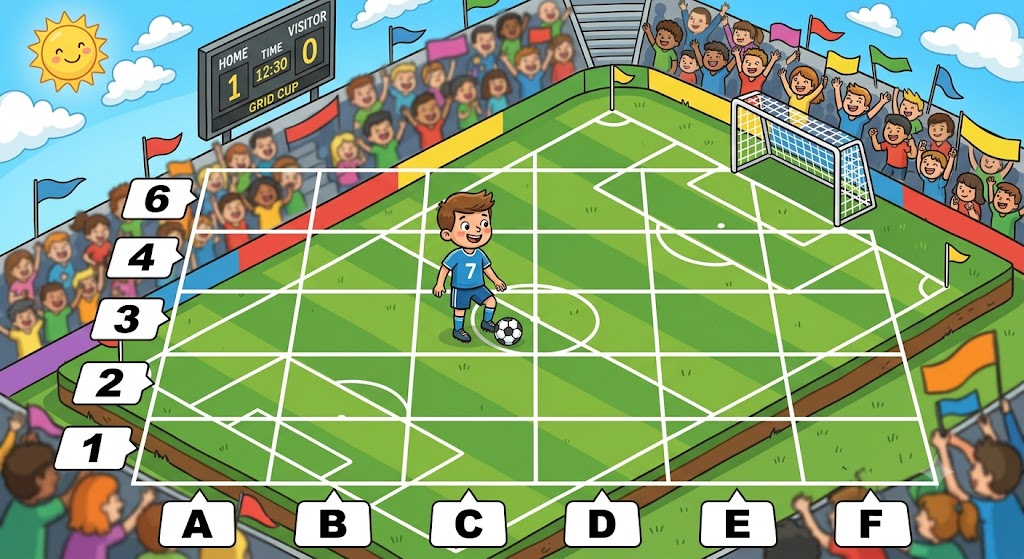
    For Year 3, Stage 2 students, the goal is twofold. First, they must learn to navigate grid-reference systems, such as identifying that a specific point on a map (like B3) is the intersection of column B and row 3. This builds essential spatial logic.

    Second, they must refine their measurement skills. Measuring to the nearest millimetre requires patience and attention to detail—skills that carry over into every area of their education.

    To help them excel:

    • Visualize the Grid: Use real-life maps. Look at a local football pitch layout. Ask, “If the goal is at A1, where is the center circle?”
    • Precision Matters: When measuring objects like a phone or a toy, encourage them to line up the zero mark perfectly. Remind them that in measurement, every millimetre counts.

    At EinstyAI, we believe that custom-tailored, curriculum-aligned stories are the key to breaking down these barriers. By embedding these skills into narrative contexts—like tracking a player’s movement on a pitch or measuring the distance of a spectacular goal—we help students overcome math anxiety and develop genuine competence.

    Don’t wait for the next homework battle. Start turning your child’s math practice into a rewarding story experience today.

    Practice Questions: The Football Pitch Challenge

    Question 1: The Striker’s Position

    On a football pitch grid, the striker is standing at coordinate C4. If the striker moves two squares to the right and one square up to shoot, what is their new coordinate?

    A) D5

    B) E5

    C) C6

    D) D6

    Question 2: Measuring the Goal

    You are measuring the width of a miniature soccer goal using a ruler. The goal width is exactly 12 centimetres and 4 millimetres. How do you write this measurement in millimetres?

    A) 124 mm

    B) 12.4 mm

    C) 140 mm

    D) 1240 mm

    Question 3: The Midfielder’s Pass

    The ball is located at A2. The defender is located at A5. How many grid squares apart are they if they are in the same column?

    A) 2 squares

    B) 3 squares

    C) 4 squares

    D) 5 squares

  • How can I help my Year 2 child master measurement and time without the frustration?

    How can I help my Year 2 child master measurement and time without the frustration?

    Do you find that your Year 2 student struggles to grasp the difference between a centimetre and a metre, or gets confused every time the clock hits the half-hour mark? You are not alone. Parents often assume their child simply “isn’t a math kid” because they struggle with abstract numbers. The truth is, math at this stage is not about numbers—it is about spatial awareness and logic.

    When children rely on counting steps or hand spans to measure, they are using informal units. Moving to formal units like metres and centimetres can feel like a jump because the measurement scale changes. Similarly, reading a clock is not just about memorising numbers; it is about understanding fractions of time (quarters and halves). To make this stick, you must anchor these concepts in a world that matters to them: storytelling.

    The “Story Problem” Trick for Better Results

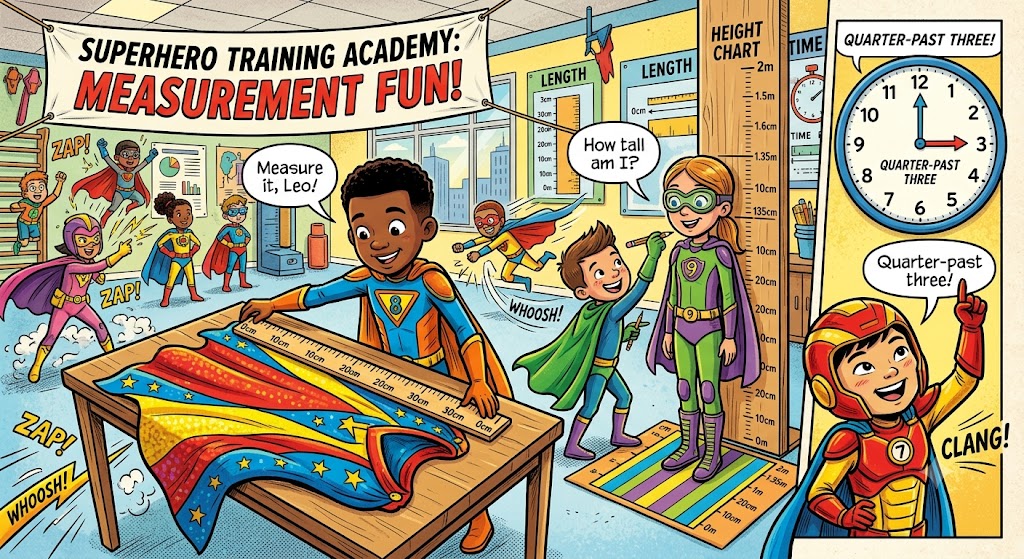
    The fastest way to teach measurement and time is to remove the “math” label entirely. If you want your child to understand that 100 centimetres equals 1 metre, don’t ask them to solve a worksheet. Ask them to design a superhero cape.

    Teach your child to visualise the problem. If a hero needs a cape that is 120 centimetres long, they need to see that this is “one metre and 20 centimetres.” By turning the measurement into a requirement for a character’s costume, the abstract numbers become tools they need to solve a narrative puzzle.

    When it comes to time, stop showing them the clock as a math problem. Treat the clock as a map. A quarter-past the hour is just a “slice” of the pizza. If the big hand is on the 3, it has moved one-quarter of the way around the circle. Visualising these segments makes the movement of the clock hands logical, not confusing.

    Why Contextual Learning Wins

    At EinstyAI, we believe that math anxiety stems from a lack of relevance. When math is isolated from the real world, it feels like a chore. When it is embedded in a story, it becomes a mission.

    Key takeaway: Stop teaching formulas and start teaching stories.

    If your child is learning to read time to the half-hour or measure objects in metres and centimetres, use their interests to frame the challenge. Are they measuring the height of a Lego tower? Are they timing how long it takes for a villain to escape a trap? By aligning the curriculum with their imagination, you bypass the anxiety and hit the learning objective head-on.

    Stop the battle at the kitchen table. Download our targeted practice set below, designed specifically for Year 2 students to bridge the gap between informal and formal measurement, and master that tricky clock face.


    Practice Questions

    Theme: The Superhero Training Academy

    1. The Cape Challenge

    Captain Zoom needs a new cape that is exactly 1 metre long. If he measures his current cape and finds it is 80 centimetres, how many more centimetres does he need to add to make it exactly 1 metre?

    A) 10 centimetres

    B) 20 centimetres

    C) 30 centimetres

    D) 120 centimetres

    2. The Villain Escape

    The arch-villain, Dr. Dread, is planning to escape his cell. The security alarm is set to go off at quarter-past 3. Which position on the clock face will the big hand be pointing to?

    A) 3

    B) 6

    C) 9

    D) 12

    3. Shield Dimensions

    Super-Strength Sam is building a new shield. He knows his shield is 50 centimetres wide. If he places two of these shields side-by-side, what is the total width in metres?

    A) 1 metre

    B) 100 metres

    C) 50 centimetres

    D) 150 centimetres

  • How can I help my Year 1 child understand directional language in maths?

    How can I help my Year 1 child understand directional language in maths?

    Ever feel like your child gets lost just by hearing the instructions “turn left” or “move forward”? It is a common frustration for parents. Many assume that if a child struggles with directions, they simply “aren’t math kids.” This is a harmful myth. Spatial awareness is a foundational skill, not a fixed talent.

    At EinstyAI, we believe that mastering the Measurement and Space strand in Year 1 does not require endless drills or stressful homework battles. It requires context. Children learn best when they can visualise the math in front of them. When you treat directional instructions as part of a story, the abstract becomes concrete.

    The Power of Spatial Reasoning

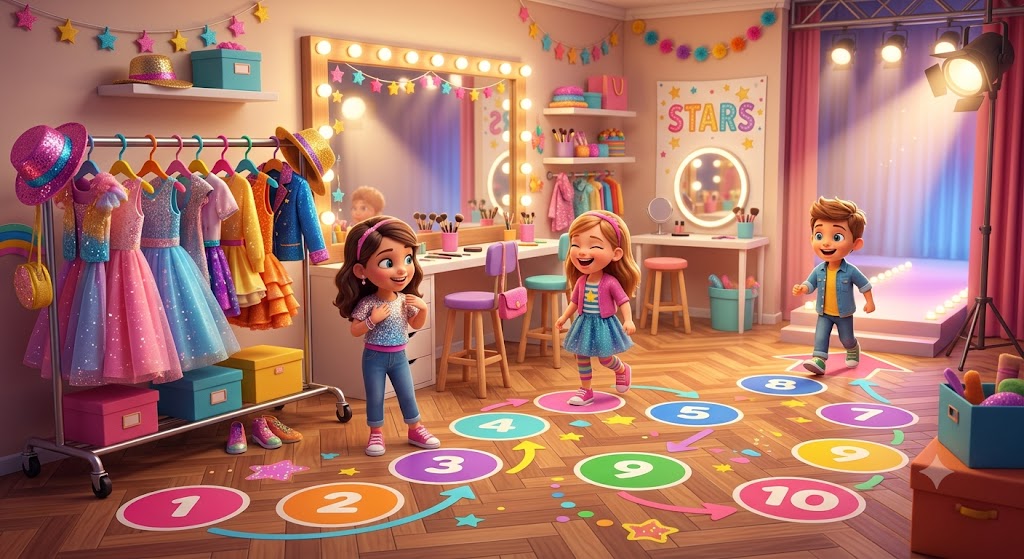
    In Year 1, students need to learn how to give and follow directions to move between locations. This is the bedrock of future geometry and complex problem-solving. If a child cannot conceptualise moving from Point A to Point B, they will struggle with more advanced concepts later, like coordinate planes or graphing.

    Spatial reasoning is like a muscle. You build it by practice, not by memorising formulas. By framing directional movement within a relatable scenario—like a high-stakes fashion show—you take the pressure off. Suddenly, the math isn’t a “subject”; it is a way to solve a problem and keep the show running on time.

    How to Turn Math into Play

    Stop asking your child to “do their math worksheet.” Instead, invite them to “help the fashion models get ready.”

    Use these three quick tips to bridge the gap:

    • Use physical props: Use toys or household items to mark “locations.”
    • Walk the path: Have your child physically move across the floor to execute the instructions they are learning. This connects the brain to the body.
    • Narrative focus: Always use a story. Whether it is a fashion show, a treasure hunt, or a trip to the bakery, a story provides the “why” behind the math.

    The takeaway is simple: If you change the context, you change the outcome. Math anxiety thrives in sterile, abstract environments. It dies when kids are having fun with a narrative that makes sense to them.

    Download the practice questions below to start applying these principles today. Let’s make the next math session the best one yet.

    Practice Questions: The Fashion Show Runway Challenge

    Help the runway models navigate the backstage area to reach their outfits. Use these questions to practice spatial awareness and directional language.

    Question 1

    The model is standing at the Dressing Room Door. To reach the Red Dress, they must move forward 3 steps and turn right. If they are facing the Red Dress, which way is the door now?

    A) Behind them

    B) To their left

    C) To their right

    D) In front of them

    Question 2

    The model is at the Shoe Rack. They need to get to the mirror. The instruction says: “Move forward 2 steps, turn left, and move forward 1 step.” Where will the model be standing?

    A) At the door

    B) At the mirror

    C) Back at the start

    D) At the hat rack

    Question 3

    The model is facing the front of the runway. To put on the Glamour Sunglasses, they must turn 90 degrees to the right. Which direction are they facing now?

    A) Towards the audience

    B) Towards the side wall

    C) Towards the back of the room

    D) Towards the floor

  • How to Explain Multiplying and Dividing Decimals by 10, 100, and 1000 to Year 6 Students?

    How to Explain Multiplying and Dividing Decimals by 10, 100, and 1000 to Year 6 Students?

    Why does my child panic the moment a decimal point appears in their homework?

    If you have ever watched your Year 6 student freeze up at a math problem, you are not alone. Parents often assume their child just isn’t a “math kid” or that they lack natural talent. The reality is usually simpler: they are missing the visual mental model for place value.

    Math homework does not have to be a battle. When students view math as a set of rigid, confusing rules, they struggle. When they view it as a pattern-spotting game, they succeed.

    The Secret: Stop Calculating, Start Sliding

    The biggest mistake students make is trying to perform traditional multiplication or division when dealing with powers of 10. They try to line up numbers vertically and carry values, which leads to mistakes.

    Instead, teach them the “Decimal Slide.”

    The decimal point does not move; the digits move. When multiplying by 10, 100, or 1000, the digits of the number slide to the left into larger place value columns. When dividing, they slide to the right into smaller columns.

    Using Storytelling to Make It Stick

    Abstract numbers are hard to remember. Prehistoric creatures are not.

    If we talk about a T-Rex egg weighing 2.5 kilograms, students immediately picture the weight. If we then “multiply by 10” to see what a nest of 10 eggs weighs, the calculation becomes a tangible, visual narrative. By anchoring these concepts in stories—like those we build at EinstyAI—we remove the “math anxiety” barrier and replace it with engagement.

    Master the Pattern Today

    Do not rely on repetitive drills that bore your child. Help them visualize the movement of numbers.

    Key Takeaways for Parents:

    • Focus on Place Value: Remind them that the decimal point is just a marker for where the “ones” column ends.
    • Use Visual Aids: If they get stuck, draw a place value chart with columns (Hundreds, Tens, Ones, . Tenths, Hundredths).
    • Consistency is Key: Practice with real-world scenarios, not just dry equations on a page.

    Want to see how this works in practice? See the “Prehistoric Decimal Hunt” worksheet below to turn your child’s next math session into an adventure.

    Practice Questions

    The Prehistoric Decimal Hunt: Worksheet

    Instructions: Help our paleontologists solve these dinosaur discoveries by multiplying and dividing decimals!

    Question 1

    A baby T-Rex weighs 4.25 kg. After a month of eating ferns and forest snacks, its weight has multiplied by 10. What does the T-Rex weigh now?

    A) 42.5 kg

    B) 425 kg

    C) 0.425 kg

    D) 4.250 kg

    Question 2

    A Triceratops footprint is 350.5 cm long. To calculate the scale for a model footprint that is 1/10th the size, you must divide the length by 10. How long is the model footprint?

    A) 3505 cm

    B) 35.05 cm

    C) 3.505 cm

    D) 350.5 cm

    Question 3

    A Pterodactyl glides across a canyon measuring 1.25 km. If a map maker wants to convert this distance into metres, they multiply the value by 1000. What is the distance in metres?

    A) 12.5 metres

    B) 125 metres

    C) 1250 metres

    D) 12500 metres

  • Why does my Year 5 student get stuck on multi-step math problems?

    Why does my Year 5 student get stuck on multi-step math problems?

    Every parent has faced the same wall: you sit down to help with homework, and the initial enthusiasm quickly dissolves into frustration. Why do students who are perfectly capable of adding and subtracting suddenly freeze when faced with a “word problem”?

    The answer is rarely about their ability to calculate. It is about their ability to translate. At the Year 5 Stage 3 level, math moves beyond simple arithmetic into Number and Algebra, where understanding the relationship between numbers is critical. When a child sees a multi-step word problem, they often see a wall of text that looks nothing like the neat equations in their textbook. They aren’t struggling with the math; they are struggling with the story.

    The mindset shift: Math is just a story

    Too many parents fall into the trap of thinking their child just “isn’t a math kid.” This creates a fixed mindset that labels a temporary struggle as a permanent character trait. In reality, math anxiety often stems from the disconnect between abstract numbers and real-world logic.

    By teaching students to break down complex problems into manageable steps, we lower that anxiety. At EinstyAI, we believe that if you can change the story, you change the result. When you frame a percentage calculation as a quest for rare loot in a game, the abstract concepts—like calculating 10%, 25%, or 50%—become tangible tools for success rather than chores to be completed.

    Mastering percentages and multi-step logic

    To solve multi-step problems, encourage your child to use the “Highlight and Pause” method.

    • Highlight the goal: What is the final question asking for?
    • Pause and plan: Before calculating, write down the known variables.
    • Divide and conquer: If the problem asks to find 10% of a total and then subtract it, that is two separate, solvable tasks. Treat them that way.

    When students learn to look for benchmarks like 10% (move the decimal one spot), 50% (divide by 2), and 25% (half of 50%), they stop guessing and start strategizing. These aren’t just tricks; they are foundational skills that make complex Number and Algebra tasks feel intuitive. Stop fighting the homework. Start building the story, and watch the math follow.

    Practice Questions

    Scenario: You are a top-tier gamer in the Roblox universe. Your success depends on your ability to manage your Robux and inventory to build the ultimate game world.

    Question 1

    You have 800 Robux. You decide to spend 50% of it on a new avatar skin and then use 10% of your remaining Robux to buy a special hat. How many Robux do you have left after these purchases?

    A) 400

    B) 360

    C) 440

    D) 320

    Question 2

    Your guild has collected 1,200 digital gems. You need to give 25% of the gems to the guild leader and then divide the remaining gems equally among 5 team members. How many gems does each team member receive?

    A) 180

    B) 240

    C) 300

    D) 200

    Question 3

    You are designing a map. You have 200 building blocks. You use 10% of your blocks for the floor and 50% of the remaining blocks to build a wall. How many blocks do you have left to build your tower?

    A) 90

    B) 100

    C) 80

    D) 110

  • How can I help my Year 4 child master mental multiplication without tears?

    How can I help my Year 4 child master mental multiplication without tears?

    Does your child freeze up when faced with multiplication facts like 7×6? You are not alone. Many parents search for ways to help their children overcome math anxiety, assuming that multiplication is just about rote memorization and endless flashcards.

    The truth is, math does not have to be a battle.

    Most children struggle with multiplication because they view it as a massive, intimidating wall of numbers. They try to memorize “7×6 = 42” without understanding the mechanics behind it. This creates a reliance on memorization that crumbles the moment they encounter a slightly larger or unfamiliar equation.

    The mental shift: Multiplication is flexible.

    At EinstyAI, we teach students to stop seeing numbers as static and start seeing them as building blocks. The secret weapon for Year 4 students is the Distributive Property.

    Think of the distributive property as the “divide and conquer” strategy of the math world. Instead of trying to solve 7×6 in one go, you break it into two smaller, easier chunks that you already know.

    How to teach the “Baking Hack”

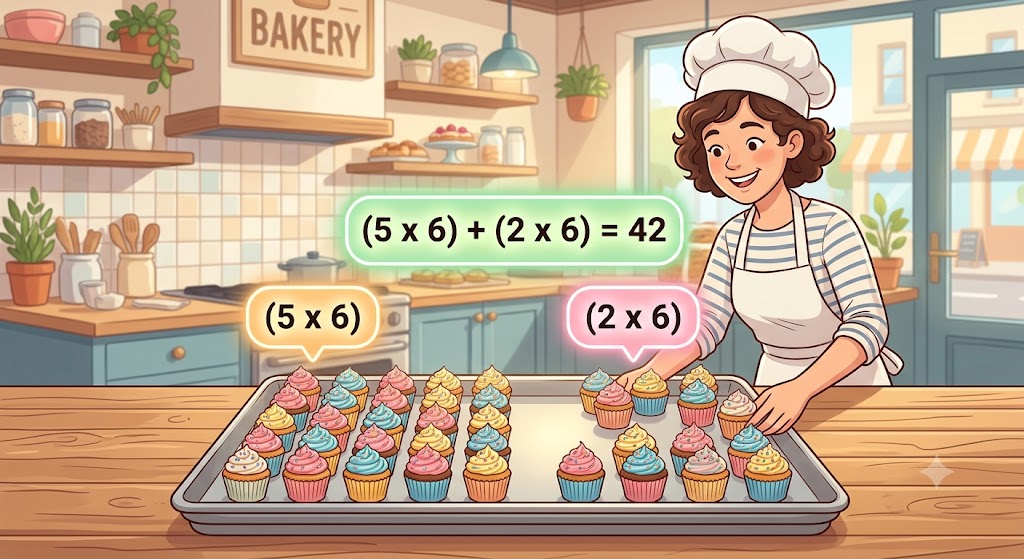
    Imagine you are baking cookies. If you need to arrange 7 rows of 6 cookies, don’t try to solve “7×6” immediately.

    1. Split the big number: Take that 7 and split it into 5 and 2.
    2. Solve the easy parts: Now you have 5 rows of 6 (which is 30) and 2 rows of 6 (which is 12).
    3. Bring them together: Add 30 and 12. You get 42.

    Why this works

    By using the distributive property, your child moves from “I don’t know this” to “I can build this.” This reduces math anxiety immediately because the child gains control over the problem. They aren’t guessing; they are calculating using known facts.

    Start your journey today

    Stop relying on rote memorization that fades under pressure. Give your child the tools to visualize numbers, solve problems creatively, and build lasting confidence.

    Download the practice worksheet below to help your child master multiplication through the art of baking. When math feels like a story, the numbers stop being scary.

    Practice Questions

    Baking Adventure: Mental Math Challenge

    Instructions: Help the bakery staff organize their orders by using the distributive property. Select the correct method or answer for each challenge.

    Question 1

    The bakery needs to arrange 8 trays of muffins, with 6 muffins on each tray. Which expression correctly uses the distributive property to help calculate the total?

    A) 8 x 6 = 8 + 6

    B) (4 x 6) + (4 x 6)

    C) (8 x 5) + 1

    D) 8 x 3 x 2

    Question 2

    You are decorating a large cake with 9 rows of 7 cherries. To calculate the total, you split 9 into 5 and 4. What is the calculation you perform?

    A) (5 x 7) + (4 x 7)

    B) (5 + 7) + (4 + 7)

    C) (5 x 9) + (4 x 9)

    D) (5 x 4) + (7 x 9)

    Question 3

    The shop has 6 boxes of donuts, and each box contains 8 donuts. How can you use your knowledge of the 5 times table to solve this?

    A) (5 x 8) + (1 x 8)

    B) (6 x 5) + (6 x 3)

    C) (5 x 6) + (8 x 6)

    D) 5 x 8 + 6

  • Why Is My Child Struggling With Fractions?

    Why Is My Child Struggling With Fractions?

    “Why does my child cry every time we open the math textbook?” If this sounds familiar, you are not alone. Many parents search for this answer because they watch their children go from confident learners to anxious students the moment fractions appear on the page.

    Here is the truth: Your child does not “hate math,” and they aren’t “bad at numbers.” They are simply reacting to a teaching method that prioritizes abstract rules over logical visualization.

    The Myth of the “Math Kid”

    We often hear the phrase, “Some kids just aren’t math kids.” This is a harmful assumption. Math is a language. When a child struggles with fractions, it is rarely a lack of ability; it is a lack of the right visual context. By aligning our approach with the Australian Curriculum standards, we can transform frustration into understanding. We don’t need to force memorization. We need to tell a better story.

    The Power of the Number Line

    When teaching unit fractions to Year 3 students, we must move away from just “drawing circles.” Circles are great, but they hide the relationship between numbers.

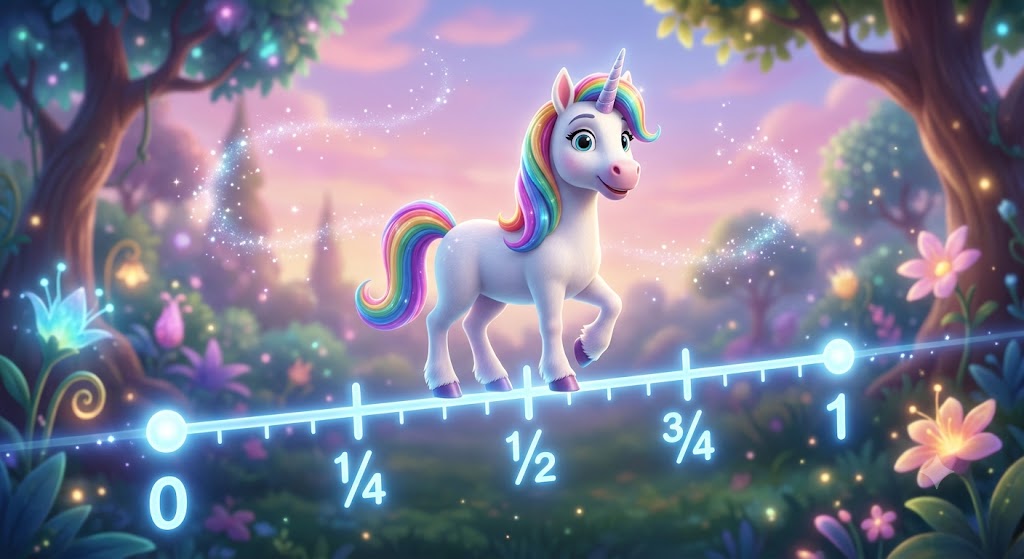
    The Number Line is the secret weapon for Stage 2 success. A number line provides a fixed, linear distance between 0 and 1. It turns a “fraction” into a physical journey.

    Here is the strategy:

    • Visualize the Path: Imagine the distance between 0 and 1 is a magical path.
    • Partitioning: If we want to show 1/4, we must split that path into 4 equal segments.
    • The Anchor: The fraction is simply the point where the first segment ends.

    By using this approach, students stop guessing which number goes on top. They see that the denominator tells them how many “jumps” to make to get to the destination.

    Your Action Plan

    Stop the homework battle tonight. Next time your child struggles with fractions, grab a ruler or draw a straight line on a piece of paper. Label the ends 0 and 1. Ask them, “If we need to place 1/3, how many equal jumps do we need to make to get to 1?”

    Visuals act as a bridge between the abstract concept and the real world. When children see the math, the anxiety disappears, and the logic takes over.

    For parents who want to turn these dry concepts into engaging, custom-tailored stories that align with the curriculum, visit EinstyAI to see how we make math a daily adventure, not a chore.

    Practice Questions

    Math Worksheet: The Magical Unicorn Journey

    Task: Help Sparkle the Unicorn navigate her magical forest. Use the number line below to find the correct spot for each fraction.

    Question 1

    Sparkle starts at 0 and needs to jump halfway to the Magical Meadow (1). Where should she land?

    A) The midpoint between 0 and 1

    B) At the number 1

    C) Before 0

    D) Past the number 1

    Question 2

    The path to the Rainbow Castle is marked in 4 equal parts. Where is 1/4 located?

    A) 3 jumps from 0

    B) 1 jump from 0

    C) 4 jumps from 0

    D) Exactly at 0

    Question 3

    Sparkle is collecting 1/3 of the Magic Gems on the path. The path is divided into 3 equal sections. Which point represents 1/3?

    A) The third mark near 1

    B) The last mark

    C) The first mark after 0

    D) The middle mark