Tag: Stage 1

  • Practice Questions: Skip-Counting Cluster

    Practice Questions: Skip-Counting Cluster

    1. Maya is visiting the Martian Barn where 12 space-frogs are jumping. If she circles them in groups of 2, how many groups will she have?

    A) 4 groups

    B) 6 groups

    C) 5 groups

    D) 12 groups

    2. There are 15 tiny space-crickets chirping in the asteroid field. Maya circles them in groups of 5. How many groups of 5 are there?

    A) 2 groups

    B) 4 groups

    C) 3 groups

    D) 5 groups

    3. Maya finds 20 glowing space-worms. She decides to circle them in groups of 2. How many groups does she make?

    A) 8 groups

    B) 9 groups

    C) 10 groups

    D) 5 groups

    4. In the lunar coop, there are 25 space-chickens. Maya groups them by 5s to feed them. How many groups does she have?

    A) 5 groups

    B) 4 groups

    C) 6 groups

    D) 10 groups

    5. Maya counts 8 space-bees buzzing around a crater. If she groups them by 2s, how many groups does she have?

    A) 2 groups

    B) 3 groups

    C) 5 groups

    D) 4 groups

    1. Correct Answer: B (6 groups).
      Strategy: Use the Skip-Counting Cluster method. Circle pairs: (1,2), (3,4), (5,6), (7,8), (9,10), (11,12). Count the circles = 6.
    2. Correct Answer: C (3 groups).
      Strategy: Circle groups of 5. Count: 5, 10, 15. That is 3 groups of five.
    3. Correct Answer: C (10 groups).
      Strategy: Count by 2s up to 20: 2, 4, 6, 8, 10, 12, 14, 16, 18, 20. There are 10 intervals.
    4. Correct Answer: A (5 groups).
      Strategy: Count by 5s: 5, 10, 15, 20, 25. That is 5 groups.
    5. Correct Answer: D (4 groups).
      Strategy: Pair them up: (2), (4), (6), (8). That is 4 groups of two.

  • How the ‘Part-Part-Whole’ Secret Turned Leo into a Prehistoric Math Hero

    How the ‘Part-Part-Whole’ Secret Turned Leo into a Prehistoric Math Hero

    The kitchen table was silent, save for the rhythmic tapping of a pencil and the heavy sigh of a six-year-old. Leo stared at his math worksheet, his eyes misting over. Before him sat a pile of plastic dinosaur toys and a printed problem about adding sea shells. “I don’t get it,” he whispered, pushing the paper away. “It’s too many numbers.” For many Year 1 parents, this scene is all too familiar. The tears, the frustration, and the erased holes in the paper are not signs that your child lacks intelligence—they are signs that they are being taught in a language they don’t speak yet.

    The Common Mistake: Why Abstract Numbers Cause Panic

    The traditional approach to teaching math often jumps straight to vertical column addition or rote memorization. For a Year 1 student in Stage 1, this feels like learning a secret code without a key. When we force abstract symbols (like 8 + 5) onto a child who is still developing number sense, their brain freezes. They lose the visual context that makes math tangible. They aren’t struggling with the math; they are struggling with the lack of a story.

    The Guide & Magic Tool: The Part-Part-Whole Method

    The solution isn’t to work harder; it’s to make math visible. We use the ‘Part-Part-Whole’ strategy. Imagine math as a dinosaur adventure. If our dinosaur hero finds one group of sea shells (the first part) and another group (the second part), we can visualize the total (the whole) by simply combining them. This strategy transforms a confusing sum into a concrete treasure hunt, giving children a visual map to solve the problem before they ever touch a pencil to the answer box.

    The Transformation: Leo’s Lightbulb Moment

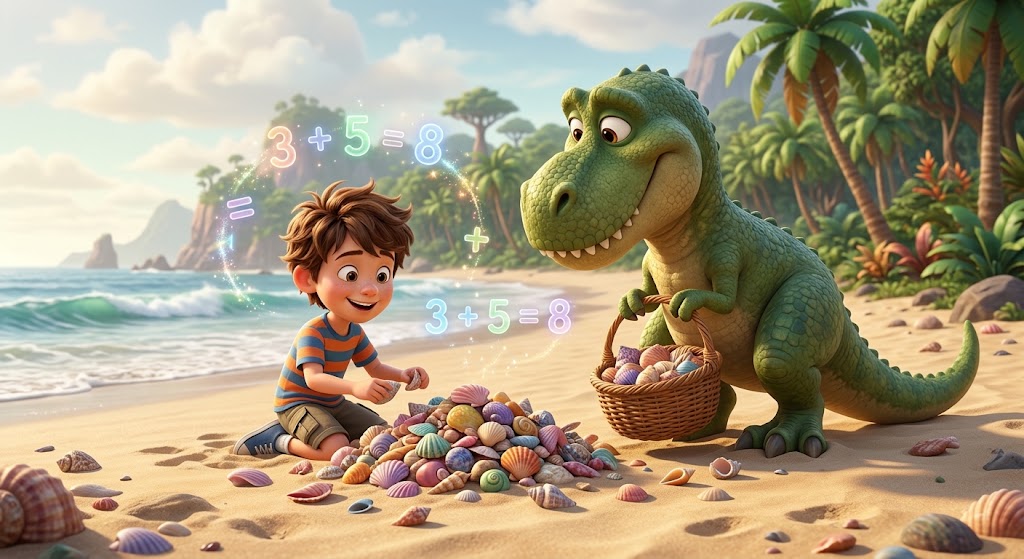
    Leo took a deep breath. We looked at his dinosaur problem: “A T-Rex finds 8 shiny sea shells on the beach. Then, he finds 5 more hidden in the sand. How many shells does the T-Rex have now?”

    Instead of panic, Leo used the Part-Part-Whole method. He put 8 fingers up for the first group. Then, he counted on 5 more fingers. His face lit up. “He has 13!” he shouted. The panic vanished, replaced by the thrill of discovery. Leo wasn’t just doing addition; he was solving a prehistoric mystery.

    Turn Homework Battles into Victories

    You don’t have to be a math expert to help your child succeed. You just need the right tools to bridge the gap between confusion and confidence. At EinstyAI, we transform dry math practice into custom-tailored stories that align with the curriculum. Stop the homework battles and start building confidence—visit us today to create personalized math adventures your child will actually love.


    Practice Questions: The Dinosaur Treasure Hunt

    Solve these addition problems by using your Part-Part-Whole strategy.

    1. A friendly Triceratops finds 7 smooth sea shells by the river. Later, she spots 4 more shells near a rock. How many shells does the Triceratops have in total?
      A) 10
      B) 11
      C) 12
      D) 9
    2. A Spinosaurus is collecting shells to decorate his cave. He has 9 shells already and finds 6 more in the sand. How many shells does he have now?
      A) 14
      B) 15
      C) 16
      D) 13
    3. A baby Stegosaurus finds 8 blue shells. His mom gives him 5 yellow shells. How many shells does the baby Stegosaurus have altogether?
      A) 12
      B) 13
      C) 14
      D) 11

  • How the ‘Bar Model’ Saved the Day for Superhero-Obsessed Leo

    How the ‘Bar Model’ Saved the Day for Superhero-Obsessed Leo

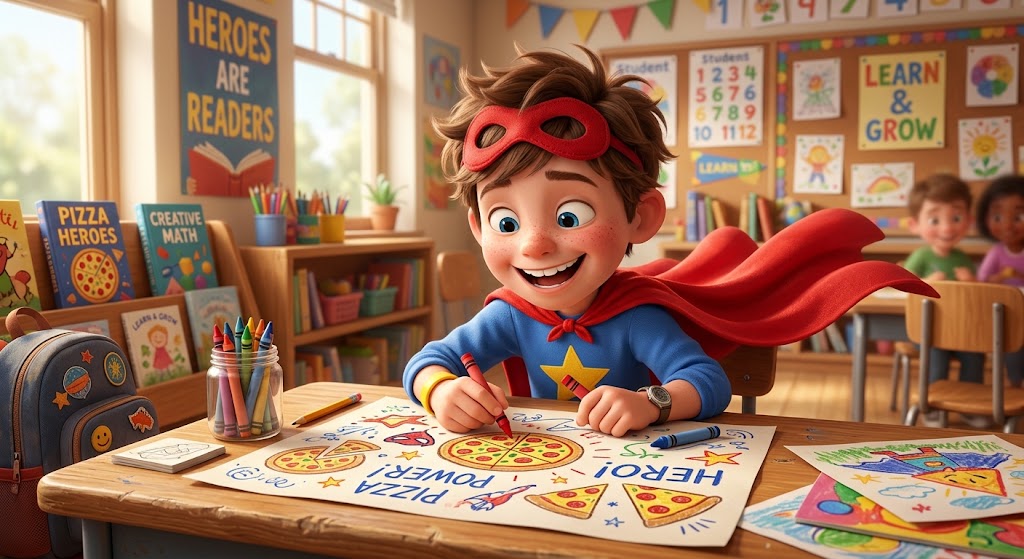
    Leo sat at the kitchen table, his superhero cape draped over his chair, but his shoulders were slumped. In front of him lay a math worksheet filled with numbers and circles. He was tasked with dividing a “party pizza” into equal shares for his team of heroes, but the numbers weren’t clicking. Tears welled up as he tried to visualize the math. For parents, this is the heartbreak of the homework battle—when a bright, creative child hits a wall because math feels like a dry, abstract chore rather than a story.

    The Problem with the ‘Memorize First’ Trap

    Many parents try to help by pushing traditional division algorithms or rote memorization of multiplication tables. The problem? When a child like Leo sees “12 divided by 4” without context, it’s just a floating number. Without a visual anchor, they panic. They guess, they erase until the paper tears, and they start to believe they simply “aren’t math people.” We need to stop forcing children to calculate numbers and start teaching them to model stories.

    Enter the Bar Model: Your Secret Weapon

    The Bar Model is a visual bridge that turns text problems into drawings. Instead of worrying about the abstract, we use rectangles to represent quantities. For Year 2 students, this makes the division of fractions or sharing quantities intuitive. It transforms “12 pizzas shared by 3 heroes” into three clear boxes, allowing the child to “see” the answer by drawing the distribution.

    The Transformation

    When we sat down with Leo, we didn’t open with a number sentence. We said, “Leo, imagine you have 8 slices of pizza to share between 2 hungry superheroes.” We drew one long rectangle and split it into two. Leo immediately drew 8 dots, placing one in each side alternately. He stopped. He counted. He realized each hero got 4.

    He didn’t just solve a math problem; he mapped out a reality. The panic vanished, replaced by the quiet confidence of a child who understands the “why” behind the math.

    Turn Homework Battles into Heroic Wins

    You don’t have to be a math teacher to help your child succeed. At EinstyAI, we create custom-tailored, story-aligned math practice that fits your child’s interests. Whether they love space, dinosaurs, or superheroes, we turn the curriculum into the stories they already love. Stop the tears and start the journey—visit EinstyAI today and let’s get your little hero back on track.


    PRACTICE QUESTIONS

    Question 1: The Pizza Party Rescue

    Captain Zoom and his sidekick have 8 slices of pepperoni pizza to share equally after saving the city. If they divide the pizza using the Bar Model, how many slices does each hero get?

    A) 2 slices

    B) 4 slices

    C) 6 slices

    D) 10 slices

    Question 2: The Energy Cupcakes

    The Superhero League has 12 energy cupcakes to share among 4 hungry team members. If each member gets the same amount, how many cupcakes go to each hero?

    A) 2 cupcakes

    B) 3 cupcakes

    C) 4 cupcakes

    D) 6 cupcakes

    Question 3: Dividing the Shields

    A group of 3 superheroes finds 9 super-shields in a secret cave. They share them equally so everyone has the same gear. How many shields does each hero have?

    A) 2 shields

    B) 3 shields

    C) 4 shields

    D) 6 shields

  • How the ‘Skip-Counting Cluster’ Method Helped Maya Save the Space-Farm

    How the ‘Skip-Counting Cluster’ Method Helped Maya Save the Space-Farm

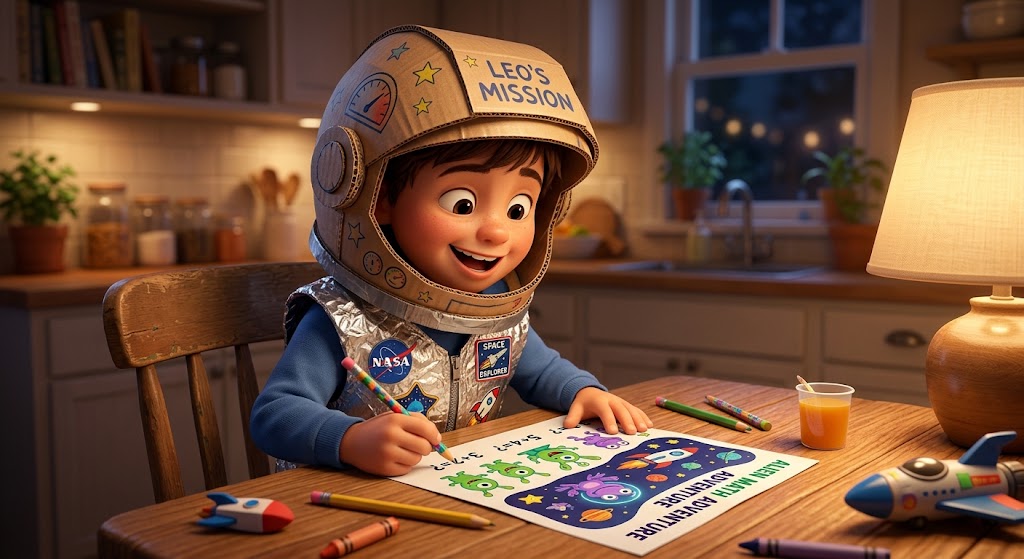
    Maya sat at the kitchen table, her pencil hovering over a worksheet about “counting groups.” Tears welled in her eyes. The page was filled with tiny pictures of alien creatures, and the instructions were a jumble of words. “I can’t do it, Mum,” she sobbed. “There are too many to count one by one, and I keep losing my place.” Maya’s experience is common for Year 1 students facing the leap from counting individual objects to conceptualizing groups.

    The Common Mistake: Why Counting One-by-One Fails

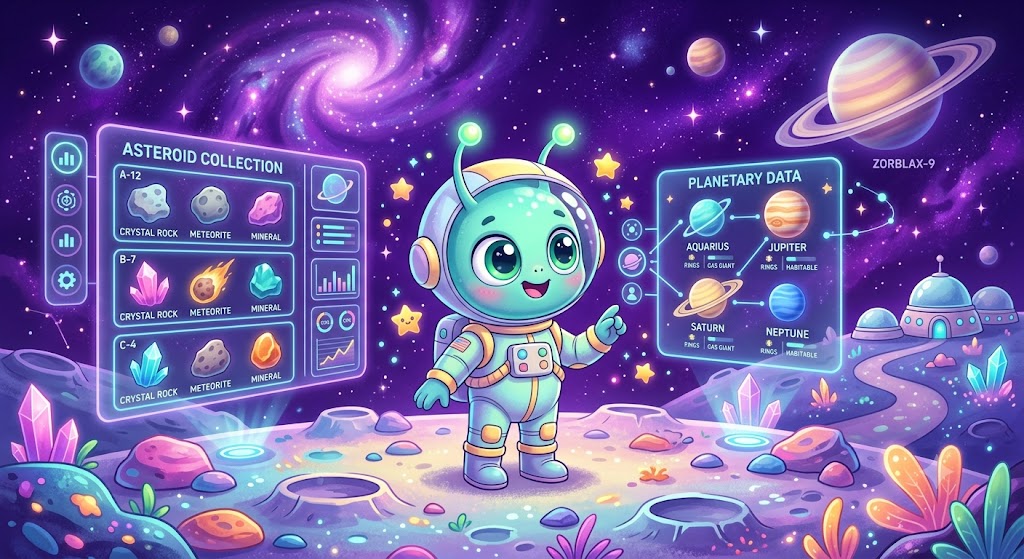
    When children encounter larger collections—like our alien wildlife counting exercise—forcing them to count “1, 2, 3…” creates a cognitive bottleneck. As the numbers grow, the child’s working memory becomes overloaded, leading to skipped numbers, frustration, and a dislike for math. This “counting fatigue” is exactly why students panic when they see a big group of items.

    The Guide & Magic Tool: The Skip-Counting Cluster Method

    To help Maya, we introduced the “Skip-Counting Cluster” method. Instead of seeing a chaotic swarm of creatures, we taught her to draw a circle around groups of 2 or 5. By isolating these clusters, the math changes from a long, painful sequence into a fast, rhythmic skip-count: “2, 4, 6, 8…” or “5, 10, 15…” This visual strategy transforms an intimidating task into a manageable game of sorting.

    The Transformation: From Panic to Power

    Maya looked at the “Alien Farm” problem: “There are 10 alien space-goats hiding in the asteroid barn. Count them in groups of 2.” Maya stopped counting one-by-one. She drew circles around each pair. She counted: “2, 4, 6, 8, 10!” Suddenly, the tears were gone. She wasn’t just counting anymore; she was organizing data. She felt like a space commander mastering her fleet, and her confidence soared.

    Turn Homework into a Victory

    At EinstyAI, we don’t just assign problems; we build stories that make math feel like an adventure. If your child is struggling with foundational math concepts, let us help you turn those daily homework battles into moments of triumph. Visit us today to generate custom-tailored math stories that fit your child’s interests and curriculum needs.


    PRACTICE QUESTIONS

    Problem 1

    Maya is visiting the Martian Barn where 12 space-frogs are jumping. If she circles them in groups of 2, how many groups will she have?

    A) 4 groups

    B) 6 groups

    C) 5 groups

    D) 12 groups

    Problem 2

    There are 15 tiny space-crickets chirping in the asteroid field. Maya circles them in groups of 5. How many groups of 5 are there?

    A) 2 groups

    B) 4 groups

    C) 3 groups

    D) 5 groups

    Problem 3

    Maya finds 20 glowing space-worms. She decides to circle them in groups of 2. How many groups does she make?

    A) 8 groups

    B) 9 groups

    C) 10 groups

    D) 5 groups

  • Is Your Child Scared of Randomness? Why Predicting Chance Builds Math Confidence

    Is Your Child Scared of Randomness? Why Predicting Chance Builds Math Confidence

    Why does your child freeze when you ask them, “What are the chances of that happening?”

    Many parents assume their child simply isn’t a “math kid” if they struggle with probability or data collection. They see frustration at the kitchen table and think the student lacks the innate talent for numbers. This is a myth. The truth is that math anxiety in Year 2 students usually stems from a disconnection between abstract concepts and real-world logic. When math is isolated from the real world, it feels like a chore, and the brain shuts down.

    Math is not about guessing; it is about interpreting the world.

    At this stage of the curriculum, we are moving children beyond rote memorization. We are teaching them to observe, organize, and predict. Whether they are sorting their toys or predicting the result of a coin toss, they are doing Statistics and Probability. To make these concepts stick, you must anchor them in a narrative.

    The “Story” Secret to Probability

    The fastest way to teach “likely” or “unlikely” outcomes is to remove the “math” label entirely. Don’t ask them to calculate percentages. Ask them to predict the next event in a space adventure.

    If a character needs to land on a planet made of green cheese, and there are 10 planets (9 of them are rock and 1 is cheese), teach them that landing on the cheese planet is “unlikely.” They don’t need a formula; they need to visualize the collection. By turning outcomes into story beats, the abstract logic becomes a tool they need to solve a narrative puzzle.

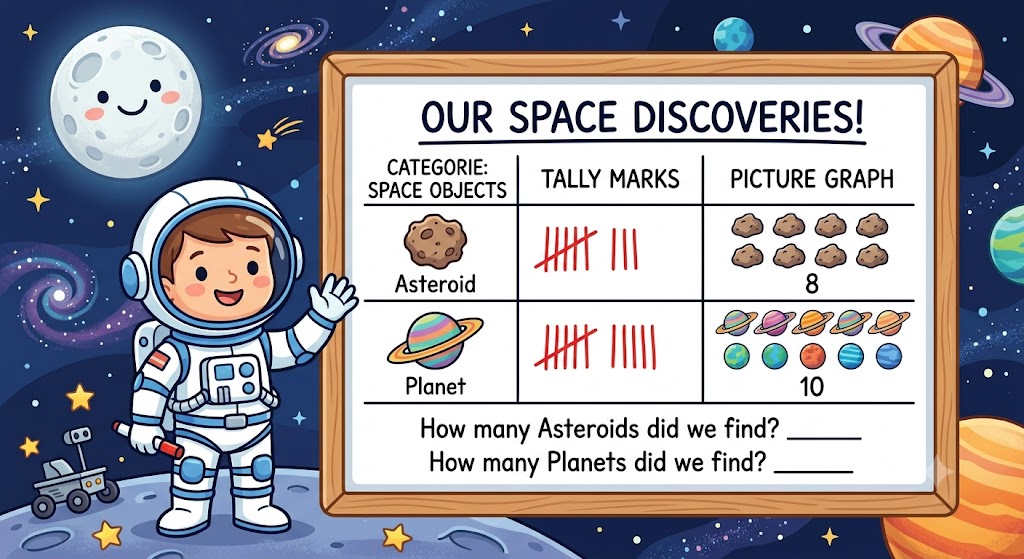
    Categorical Displays: Tallying the Chaos

    Before children can graph data, they must learn to gather it. Categorical displays, like picture graphs or simple tallies, are the ultimate tools for this.

    Key Takeaway: One symbol equals one item.

    When your child organizes data, encourage them to use the “one-to-one correspondence” rule. If they are counting alien spaceships, each drawing must represent exactly one ship. This turns a messy list into a clear visual representation.

    Stop the Homework Battle

    Math anxiety thrives on confusion. When math is embedded in a story, it becomes a mission. Stop fighting the curriculum and start using stories that make math feel like play. At EinstyAI, we transform dry curriculum outcomes into stories that stick, turning the “homework battle” into a moment of discovery.

    Ready to change the way your child learns? Stop teaching formulas and start teaching stories today.

    Practice Questions

    1. The Alien Invasion
    You are watching the sky for alien ships. You see 10 ships arrive. 9 of them are Silver and 1 is Neon Green. Based on this, is it likely or unlikely that the next ship you see will be Neon Green?

    A) Likely

    B) Unlikely

    C) Certain

    D) Impossible

    2. The Space Rock Tally
    You are collecting space rocks. You find 4 red rocks, 2 blue rocks, and 5 grey rocks. How many total rocks do you have?

    A) 10

    B) 11

    C) 9

    D) 12

    3. The Planet Explorer
    You have a bag with 3 Planet Cards: Mars, Earth, and Jupiter. You close your eyes and pick one. Which of these is true?

    A) Picking Jupiter is more likely than picking Mars.

    B) Picking Earth is impossible.

    C) Picking Mars is as likely as picking Jupiter.

    D) You are certain to pick Saturn.

  • How Can You Help Your Year 1 Child Understand Math Data Without the Tears?

    How Can You Help Your Year 1 Child Understand Math Data Without the Tears?

    Ever wonder why your child finds math homework exhausting but can spend hours meticulously sorting their LEGO collection or trading cards? The difference isn’t their ability—it’s the context. Many parents assume that children “just aren’t math kids” if they struggle with abstract numbers on a page. In reality, math becomes a battle when it feels disconnected from their world.

    Statistics and Probability don’t have to be intimidating. In Year 1, we aren’t looking for complex calculus; we are teaching children to observe, record, and interpret their environment. The secret to mastering this is moving from the abstract to the concrete: teaching them that data is simply a story told in numbers.

    Why Tally Marks are a Game Changer

    Before children can graph data, they must learn to gather it. Tally marks are the ultimate tool for this. They are simple, fast, and visual.

    When your child records what they see, they are actively participating in the math. Encourage your child to use tally marks for everyday observations. How many red cars pass the house? How many blue birds are in the tree? When they create a “tally list,” they are building the foundation for data literacy.

    From Tallies to Pictures: Making Math Visual

    Once the data is gathered, it needs to be organized. This is where picture graphs come in. A picture graph turns those abstract tally marks into a clear visual representation.

    Strategy Tip: Show your child that one symbol equals one item. This is the “one-to-one correspondence” rule. If you have 3 tally marks for “Stars,” your graph should have 3 star stickers or drawings. It turns a list into a picture, making it instantly readable.

    Start Your Math Journey Today

    Don’t wait for the next homework assignment to make math engaging. At EinstyAI, we transform dry curriculum outcomes into stories that stick. By aligning math practice with topics your child actually cares about, we turn the “homework battle” into a moment of discovery.

    Stop fighting the curriculum. Start using stories that make math feel like play. Visit us at EinstyAI to find custom-tailored resources designed to help your child succeed.

    Practice Questions

    Space Exploration: Data Gathering Worksheet

    Welcome, Space Cadet! Today, we are organizing our findings from our mission to the galaxy. Help us categorize what we found in space.

    Question 1 (Tallying)

    Commander Zog found some space rocks. He made a tally mark for every rock he found.

    (IIII)

    How many space rocks did he find?

    A) 3

    B) 4

    C) 5

    D) 6

    Question 2 (Reading the Graph)

    We looked at the spaceships parked at the base:

    • Rocket A: 2 spaceships
    • Rocket B: 4 spaceships
    • Rocket C: 1 spaceship

    If you were to draw this on a picture graph, which rocket would have the most pictures?
    A) Rocket A
    B) Rocket B
    C) Rocket C
    D) None of them

    Question 3 (Connecting Data)

    You have a list of aliens spotted: 3 Green Aliens and 2 Purple Aliens. Which picture graph shows this correctly?

    A) 3 Green circles and 3 Purple circles

    B) 2 Green circles and 3 Purple circles

    C) 3 Green circles and 2 Purple circles

    D) 5 Green circles and 0 Purple circles
  • How can I help my Year 2 child master measurement and time without the frustration?

    How can I help my Year 2 child master measurement and time without the frustration?

    Do you find that your Year 2 student struggles to grasp the difference between a centimetre and a metre, or gets confused every time the clock hits the half-hour mark? You are not alone. Parents often assume their child simply “isn’t a math kid” because they struggle with abstract numbers. The truth is, math at this stage is not about numbers—it is about spatial awareness and logic.

    When children rely on counting steps or hand spans to measure, they are using informal units. Moving to formal units like metres and centimetres can feel like a jump because the measurement scale changes. Similarly, reading a clock is not just about memorising numbers; it is about understanding fractions of time (quarters and halves). To make this stick, you must anchor these concepts in a world that matters to them: storytelling.

    The “Story Problem” Trick for Better Results

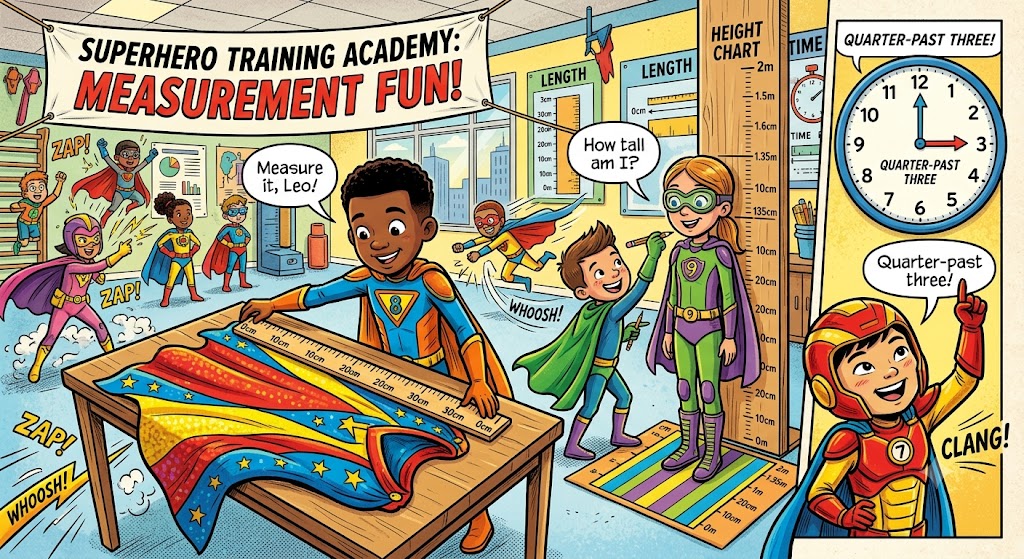
    The fastest way to teach measurement and time is to remove the “math” label entirely. If you want your child to understand that 100 centimetres equals 1 metre, don’t ask them to solve a worksheet. Ask them to design a superhero cape.

    Teach your child to visualise the problem. If a hero needs a cape that is 120 centimetres long, they need to see that this is “one metre and 20 centimetres.” By turning the measurement into a requirement for a character’s costume, the abstract numbers become tools they need to solve a narrative puzzle.

    When it comes to time, stop showing them the clock as a math problem. Treat the clock as a map. A quarter-past the hour is just a “slice” of the pizza. If the big hand is on the 3, it has moved one-quarter of the way around the circle. Visualising these segments makes the movement of the clock hands logical, not confusing.

    Why Contextual Learning Wins

    At EinstyAI, we believe that math anxiety stems from a lack of relevance. When math is isolated from the real world, it feels like a chore. When it is embedded in a story, it becomes a mission.

    Key takeaway: Stop teaching formulas and start teaching stories.

    If your child is learning to read time to the half-hour or measure objects in metres and centimetres, use their interests to frame the challenge. Are they measuring the height of a Lego tower? Are they timing how long it takes for a villain to escape a trap? By aligning the curriculum with their imagination, you bypass the anxiety and hit the learning objective head-on.

    Stop the battle at the kitchen table. Download our targeted practice set below, designed specifically for Year 2 students to bridge the gap between informal and formal measurement, and master that tricky clock face.


    Practice Questions

    Theme: The Superhero Training Academy

    1. The Cape Challenge

    Captain Zoom needs a new cape that is exactly 1 metre long. If he measures his current cape and finds it is 80 centimetres, how many more centimetres does he need to add to make it exactly 1 metre?

    A) 10 centimetres

    B) 20 centimetres

    C) 30 centimetres

    D) 120 centimetres

    2. The Villain Escape

    The arch-villain, Dr. Dread, is planning to escape his cell. The security alarm is set to go off at quarter-past 3. Which position on the clock face will the big hand be pointing to?

    A) 3

    B) 6

    C) 9

    D) 12

    3. Shield Dimensions

    Super-Strength Sam is building a new shield. He knows his shield is 50 centimetres wide. If he places two of these shields side-by-side, what is the total width in metres?

    A) 1 metre

    B) 100 metres

    C) 50 centimetres

    D) 150 centimetres

  • How can I help my Year 1 child understand directional language in maths?

    How can I help my Year 1 child understand directional language in maths?

    Ever feel like your child gets lost just by hearing the instructions “turn left” or “move forward”? It is a common frustration for parents. Many assume that if a child struggles with directions, they simply “aren’t math kids.” This is a harmful myth. Spatial awareness is a foundational skill, not a fixed talent.

    At EinstyAI, we believe that mastering the Measurement and Space strand in Year 1 does not require endless drills or stressful homework battles. It requires context. Children learn best when they can visualise the math in front of them. When you treat directional instructions as part of a story, the abstract becomes concrete.

    The Power of Spatial Reasoning

    In Year 1, students need to learn how to give and follow directions to move between locations. This is the bedrock of future geometry and complex problem-solving. If a child cannot conceptualise moving from Point A to Point B, they will struggle with more advanced concepts later, like coordinate planes or graphing.

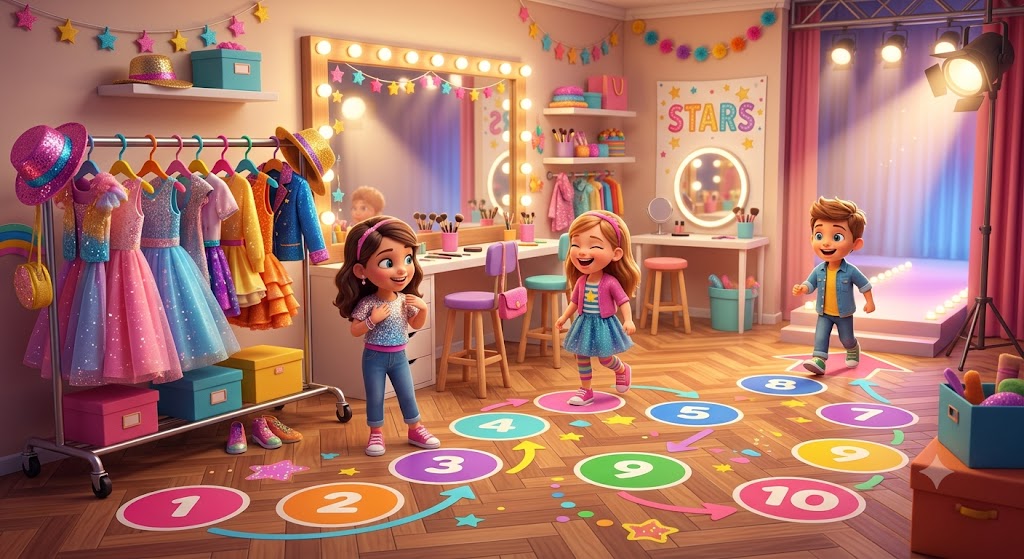
    Spatial reasoning is like a muscle. You build it by practice, not by memorising formulas. By framing directional movement within a relatable scenario—like a high-stakes fashion show—you take the pressure off. Suddenly, the math isn’t a “subject”; it is a way to solve a problem and keep the show running on time.

    How to Turn Math into Play

    Stop asking your child to “do their math worksheet.” Instead, invite them to “help the fashion models get ready.”

    Use these three quick tips to bridge the gap:

    • Use physical props: Use toys or household items to mark “locations.”
    • Walk the path: Have your child physically move across the floor to execute the instructions they are learning. This connects the brain to the body.
    • Narrative focus: Always use a story. Whether it is a fashion show, a treasure hunt, or a trip to the bakery, a story provides the “why” behind the math.

    The takeaway is simple: If you change the context, you change the outcome. Math anxiety thrives in sterile, abstract environments. It dies when kids are having fun with a narrative that makes sense to them.

    Download the practice questions below to start applying these principles today. Let’s make the next math session the best one yet.

    Practice Questions: The Fashion Show Runway Challenge

    Help the runway models navigate the backstage area to reach their outfits. Use these questions to practice spatial awareness and directional language.

    Question 1

    The model is standing at the Dressing Room Door. To reach the Red Dress, they must move forward 3 steps and turn right. If they are facing the Red Dress, which way is the door now?

    A) Behind them

    B) To their left

    C) To their right

    D) In front of them

    Question 2

    The model is at the Shoe Rack. They need to get to the mirror. The instruction says: “Move forward 2 steps, turn left, and move forward 1 step.” Where will the model be standing?

    A) At the door

    B) At the mirror

    C) Back at the start

    D) At the hat rack

    Question 3

    The model is facing the front of the runway. To put on the Glamour Sunglasses, they must turn 90 degrees to the right. Which direction are they facing now?

    A) Towards the audience

    B) Towards the side wall

    C) Towards the back of the room

    D) Towards the floor

  • Why is Year 1 math homework a battleground and how do you fix it?

    Why is Year 1 math homework a battleground and how do you fix it?

    Does sitting down for math homework with your Year 1 child feel like a daily negotiation? You are not alone. Many parents believe that some children just “aren’t math kids.” This is a myth. The struggle rarely stems from a lack of ability; it stems from a disconnect between how math is taught in the classroom and how it is practiced at home.

    The Australian curriculum has shifted away from rote memorization toward deep conceptual understanding. For Year 1 students, the pivot point is part-part-whole reasoning. If your child struggles with addition and subtraction within 20, they likely haven’t mastered this mental model yet.

    What is Part-Part-Whole Reasoning?

    Think of a number as a “whole” bucket. You can split that bucket into two smaller “parts.” For example, if the whole is 10, the parts could be 6 and 4.

    When children learn to see numbers this way, addition and subtraction become the same relationship viewed from different angles. Addition is putting the two parts together to find the whole. Subtraction is starting with the whole and removing one part to find the other.

    Key Takeaway: Stop teaching your child to “count up” or “count down” on their fingers. Start asking, “What is the whole, and what are the parts?”

    The “Story Problem” Trick for Success

    Children often panic when they see a number sentence like 12 – 5 = ? because it looks abstract. They don’t see the context. The secret to EinstyAI is transforming these dry numbers into meaningful stories.

    When helping your child at home, use the “Visual Story” technique:

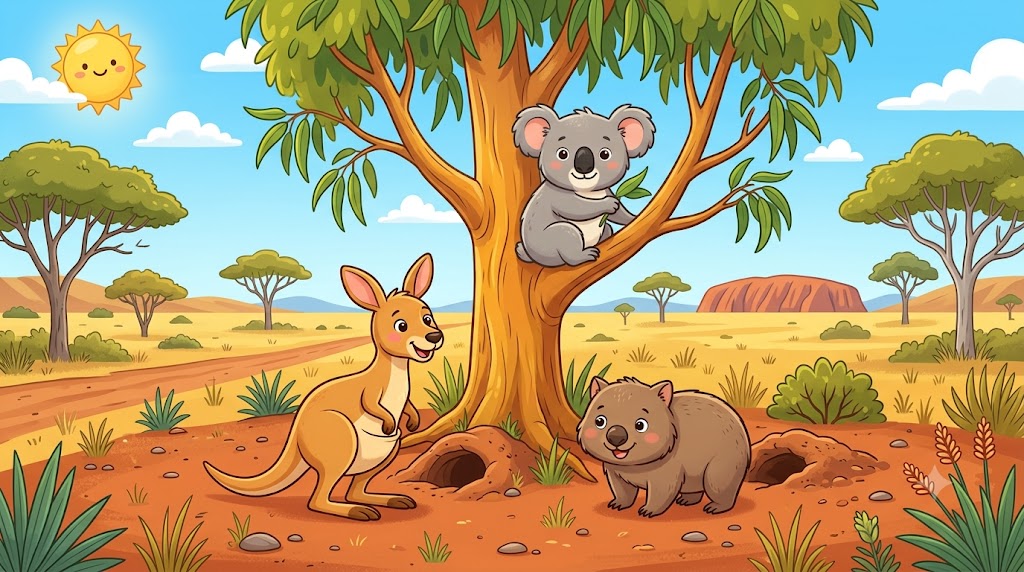
    1. Give the numbers a job: Instead of “12 minus 5,” say, “There are 12 koalas in a tree. 5 jump down to get a drink. How many are left in the tree?”
    2. Draw the parts: Encourage your child to draw the 12 koalas. Then, have them circle the 5 that jump away. This creates a visual representation of the “whole” (12) being split into the “part” that left (5) and the “part” remaining (7).
    3. Translate to Math: Only after they solve the story should you write the number sentence (12 – 5 = 7).

    Actionable Strategy: Next time your child gets stuck, stop focusing on the answer. Ask, “What are the parts we know, and what is the whole we are trying to find?” This mindset shift builds confidence because it turns math from a guessing game into a puzzle they can solve.

    Stop battling over rote practice. Help your child build these mental models by using stories that make sense to them. Complete our Year 1 Math Worksheet below to start practicing part-part-whole reasoning today.

    Practice Questions

    The Great Outback Animal Rescue Challenge

    Welcome to the Outback Rescue! You are a Junior Ranger tasked with counting and caring for our native animals. Use your part-part-whole skills to ensure every animal is safe and accounted for.

    Question 1: The Kangaroo Hop

    A group of 14 kangaroos is resting in the shade. 6 kangaroos decide to hop away to find fresh grass. How many kangaroos are left resting in the shade?

    A) 6

    B) 7

    C) 8

    D) 20

    Question 2: The Wombat Burrow

    There are 9 wombats in a big burrow and 5 wombats in a smaller tunnel nearby. How many wombats are there altogether?

    A) 4

    B) 12

    C) 14

    D) 15

    Question 3: The Emu Egg Collection

    A ranger finds a nest with 18 eggs in total. If 9 eggs are in the main nest and the rest are in a hidden patch, how many eggs are in the hidden patch?

    A) 8

    B) 9

    C) 10

    D) 27

  • Why Does Your Year 2 Math Homework Always End in Tears?

    Why Does Your Year 2 Math Homework Always End in Tears?

    It is the question every parent dreads hearing after school: “Mom, Dad, can you help me with this?” Suddenly, a simple homework assignment turns into a battleground of frustration and confusion. You assume your child just isn’t a “math kid,” but that is rarely the truth. The reality is that traditional worksheets often lack the narrative hook needed to keep a child’s brain engaged.

    The “Math Brain” Myth

    You likely believe that mathematical ability is innate—you either have it, or you don’t. This is false. Math anxiety in Year 2 students is almost always caused by a disconnection between abstract numbers on a page and real-world logic. When math feels like a chore, the brain shuts down. When math feels like a game, the brain switches on.

    The “Grouping” Trick for Success

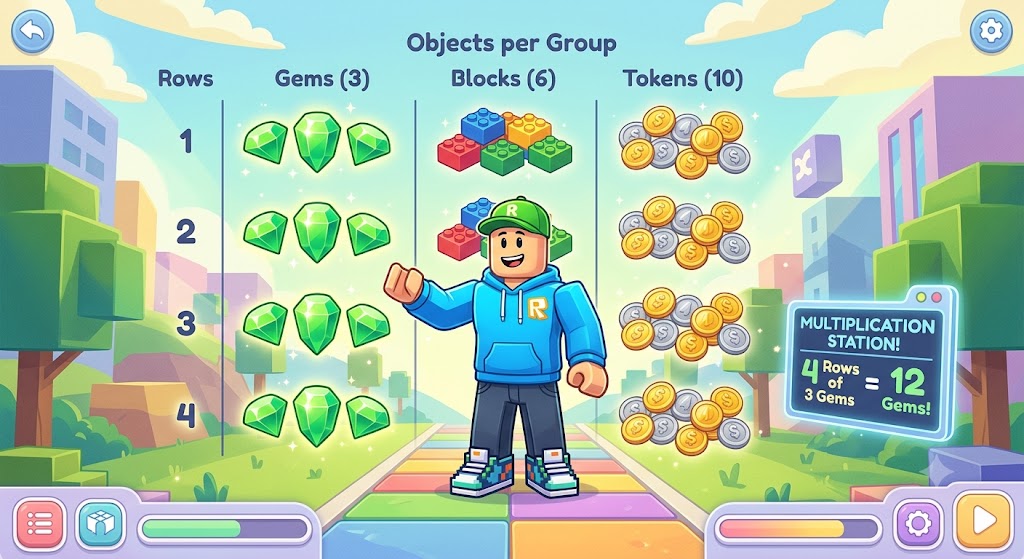
    In Year 2, the core skill involves understanding repeated addition and modeling simple fractions like halves, quarters, and eighths of collections. The secret to mastering this is the “Story Grouping” technique.

    Don’t let them just look at the numbers. Instead, visualize the quantity as items in a collection. If the question asks for 3 groups of 4, have them draw 3 game avatars, each holding 4 items. By turning equations into tangible stories, students stop guessing and start calculating. This approach aligns perfectly with the current Stage 1 curriculum goals.

    Turn Math into an Adventure

    If your child loves gaming, use that interest as a bridge. Whether they are trading skins, building structures, or counting currency, the math stays the same—only the context changes. EinstyAI specializes in exactly this: transforming dry curriculum requirements into compelling stories. Stop fighting over homework. Start narrating the math.

    Practice Questions (The “Roblox Adventure” Set)

    1. The Avatar Collection

    Your favorite Roblox game gives you 3 avatar skins every time you complete a level. If you complete 4 levels, how many skins do you have in total?

    A) 7

    B) 10

    C) 12

    D) 15

    2. The Block Builder

    You are building a wall. Each row needs 5 blocks. You build 3 rows. How many blocks did you use in total?

    A) 8

    B) 15

    C) 20

    D) 12

    3. Sharing the Loot

    You have 8 rare gems. You want to share them equally with your best friend. How many gems does each person get if you split them in half?

    A) 2

    B) 3

    C) 4

    D) 6