Why does your child freeze when you ask them, “What are the chances of that happening?”
Many parents assume their child simply isn’t a “math kid” if they struggle with probability or data collection. They see frustration at the kitchen table and think the student lacks the innate talent for numbers. This is a myth. The truth is that math anxiety in Year 2 students usually stems from a disconnection between abstract concepts and real-world logic. When math is isolated from the real world, it feels like a chore, and the brain shuts down.
Math is not about guessing; it is about interpreting the world.
At this stage of the curriculum, we are moving children beyond rote memorization. We are teaching them to observe, organize, and predict. Whether they are sorting their toys or predicting the result of a coin toss, they are doing Statistics and Probability. To make these concepts stick, you must anchor them in a narrative.
The “Story” Secret to Probability
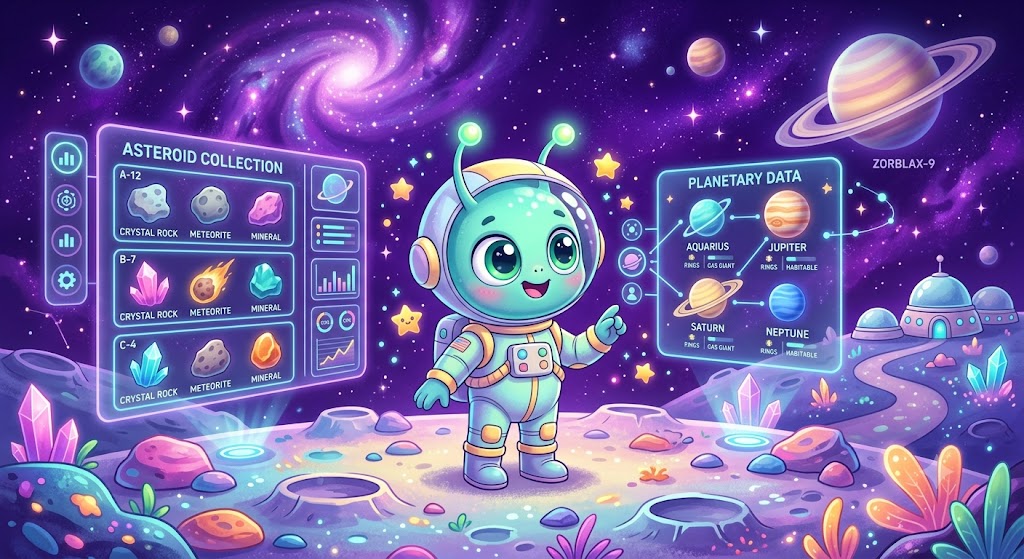
The fastest way to teach “likely” or “unlikely” outcomes is to remove the “math” label entirely. Don’t ask them to calculate percentages. Ask them to predict the next event in a space adventure.
If a character needs to land on a planet made of green cheese, and there are 10 planets (9 of them are rock and 1 is cheese), teach them that landing on the cheese planet is “unlikely.” They don’t need a formula; they need to visualize the collection. By turning outcomes into story beats, the abstract logic becomes a tool they need to solve a narrative puzzle.
Categorical Displays: Tallying the Chaos
Before children can graph data, they must learn to gather it. Categorical displays, like picture graphs or simple tallies, are the ultimate tools for this.
Key Takeaway: One symbol equals one item.
When your child organizes data, encourage them to use the “one-to-one correspondence” rule. If they are counting alien spaceships, each drawing must represent exactly one ship. This turns a messy list into a clear visual representation.
Stop the Homework Battle
Math anxiety thrives on confusion. When math is embedded in a story, it becomes a mission. Stop fighting the curriculum and start using stories that make math feel like play. At EinstyAI, we transform dry curriculum outcomes into stories that stick, turning the “homework battle” into a moment of discovery.
Ready to change the way your child learns? Stop teaching formulas and start teaching stories today.
Practice Questions
1. The Alien Invasion
You are watching the sky for alien ships. You see 10 ships arrive. 9 of them are Silver and 1 is Neon Green. Based on this, is it likely or unlikely that the next ship you see will be Neon Green?
A) Likely
B) Unlikely
C) Certain
D) Impossible
2. The Space Rock Tally
You are collecting space rocks. You find 4 red rocks, 2 blue rocks, and 5 grey rocks. How many total rocks do you have?
A) 10
B) 11
C) 9
D) 12
3. The Planet Explorer
You have a bag with 3 Planet Cards: Mars, Earth, and Jupiter. You close your eyes and pick one. Which of these is true?
A) Picking Jupiter is more likely than picking Mars.
B) Picking Earth is impossible.
C) Picking Mars is as likely as picking Jupiter.
D) You are certain to pick Saturn.