Tag: addition

  • How the ‘Part-Part-Whole’ Secret Turned Leo into a Prehistoric Math Hero

    How the ‘Part-Part-Whole’ Secret Turned Leo into a Prehistoric Math Hero

    The kitchen table was silent, save for the rhythmic tapping of a pencil and the heavy sigh of a six-year-old. Leo stared at his math worksheet, his eyes misting over. Before him sat a pile of plastic dinosaur toys and a printed problem about adding sea shells. “I don’t get it,” he whispered, pushing the paper away. “It’s too many numbers.” For many Year 1 parents, this scene is all too familiar. The tears, the frustration, and the erased holes in the paper are not signs that your child lacks intelligence—they are signs that they are being taught in a language they don’t speak yet.

    The Common Mistake: Why Abstract Numbers Cause Panic

    The traditional approach to teaching math often jumps straight to vertical column addition or rote memorization. For a Year 1 student in Stage 1, this feels like learning a secret code without a key. When we force abstract symbols (like 8 + 5) onto a child who is still developing number sense, their brain freezes. They lose the visual context that makes math tangible. They aren’t struggling with the math; they are struggling with the lack of a story.

    The Guide & Magic Tool: The Part-Part-Whole Method

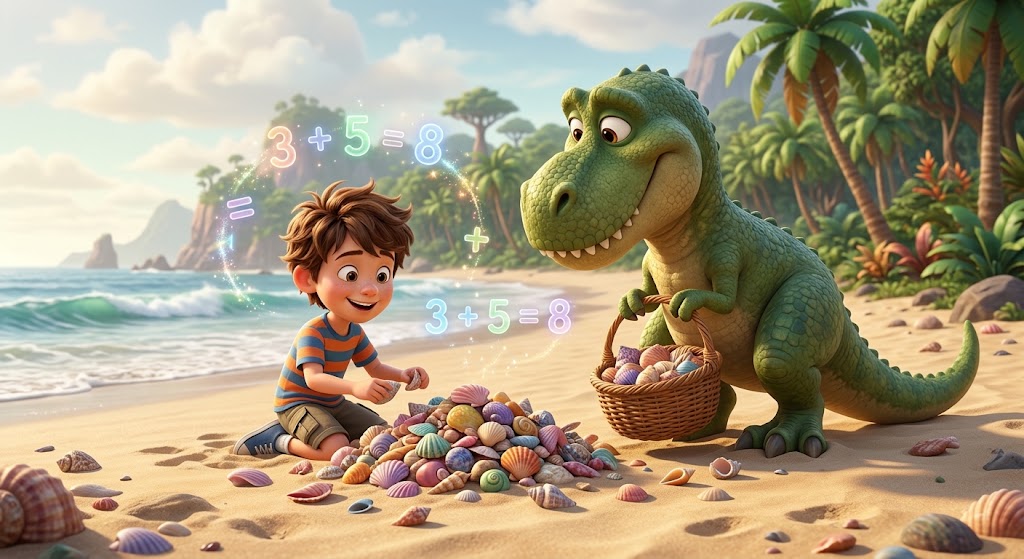
    The solution isn’t to work harder; it’s to make math visible. We use the ‘Part-Part-Whole’ strategy. Imagine math as a dinosaur adventure. If our dinosaur hero finds one group of sea shells (the first part) and another group (the second part), we can visualize the total (the whole) by simply combining them. This strategy transforms a confusing sum into a concrete treasure hunt, giving children a visual map to solve the problem before they ever touch a pencil to the answer box.

    The Transformation: Leo’s Lightbulb Moment

    Leo took a deep breath. We looked at his dinosaur problem: “A T-Rex finds 8 shiny sea shells on the beach. Then, he finds 5 more hidden in the sand. How many shells does the T-Rex have now?”

    Instead of panic, Leo used the Part-Part-Whole method. He put 8 fingers up for the first group. Then, he counted on 5 more fingers. His face lit up. “He has 13!” he shouted. The panic vanished, replaced by the thrill of discovery. Leo wasn’t just doing addition; he was solving a prehistoric mystery.

    Turn Homework Battles into Victories

    You don’t have to be a math expert to help your child succeed. You just need the right tools to bridge the gap between confusion and confidence. At EinstyAI, we transform dry math practice into custom-tailored stories that align with the curriculum. Stop the homework battles and start building confidence—visit us today to create personalized math adventures your child will actually love.


    Practice Questions: The Dinosaur Treasure Hunt

    Solve these addition problems by using your Part-Part-Whole strategy.

    1. A friendly Triceratops finds 7 smooth sea shells by the river. Later, she spots 4 more shells near a rock. How many shells does the Triceratops have in total?
      A) 10
      B) 11
      C) 12
      D) 9
    2. A Spinosaurus is collecting shells to decorate his cave. He has 9 shells already and finds 6 more in the sand. How many shells does he have now?
      A) 14
      B) 15
      C) 16
      D) 13
    3. A baby Stegosaurus finds 8 blue shells. His mom gives him 5 yellow shells. How many shells does the baby Stegosaurus have altogether?
      A) 12
      B) 13
      C) 14
      D) 11
  • Why is Year 1 math homework a battleground and how do you fix it?

    Why is Year 1 math homework a battleground and how do you fix it?

    Does sitting down for math homework with your Year 1 child feel like a daily negotiation? You are not alone. Many parents believe that some children just “aren’t math kids.” This is a myth. The struggle rarely stems from a lack of ability; it stems from a disconnect between how math is taught in the classroom and how it is practiced at home.

    The Australian curriculum has shifted away from rote memorization toward deep conceptual understanding. For Year 1 students, the pivot point is part-part-whole reasoning. If your child struggles with addition and subtraction within 20, they likely haven’t mastered this mental model yet.

    What is Part-Part-Whole Reasoning?

    Think of a number as a “whole” bucket. You can split that bucket into two smaller “parts.” For example, if the whole is 10, the parts could be 6 and 4.

    When children learn to see numbers this way, addition and subtraction become the same relationship viewed from different angles. Addition is putting the two parts together to find the whole. Subtraction is starting with the whole and removing one part to find the other.

    Key Takeaway: Stop teaching your child to “count up” or “count down” on their fingers. Start asking, “What is the whole, and what are the parts?”

    The “Story Problem” Trick for Success

    Children often panic when they see a number sentence like 12 – 5 = ? because it looks abstract. They don’t see the context. The secret to EinstyAI is transforming these dry numbers into meaningful stories.

    When helping your child at home, use the “Visual Story” technique:

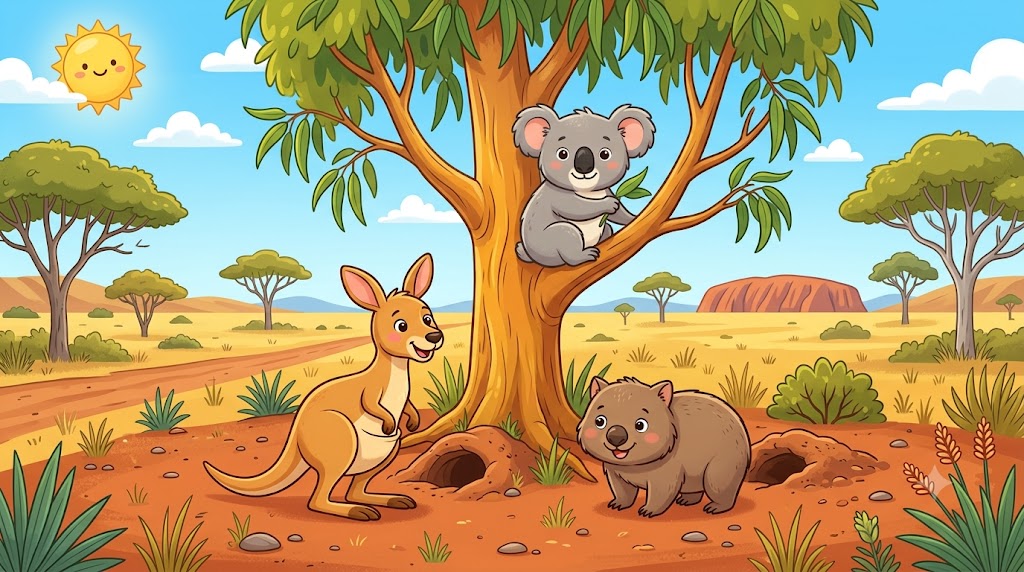
    1. Give the numbers a job: Instead of “12 minus 5,” say, “There are 12 koalas in a tree. 5 jump down to get a drink. How many are left in the tree?”
    2. Draw the parts: Encourage your child to draw the 12 koalas. Then, have them circle the 5 that jump away. This creates a visual representation of the “whole” (12) being split into the “part” that left (5) and the “part” remaining (7).
    3. Translate to Math: Only after they solve the story should you write the number sentence (12 – 5 = 7).

    Actionable Strategy: Next time your child gets stuck, stop focusing on the answer. Ask, “What are the parts we know, and what is the whole we are trying to find?” This mindset shift builds confidence because it turns math from a guessing game into a puzzle they can solve.

    Stop battling over rote practice. Help your child build these mental models by using stories that make sense to them. Complete our Year 1 Math Worksheet below to start practicing part-part-whole reasoning today.

    Practice Questions

    The Great Outback Animal Rescue Challenge

    Welcome to the Outback Rescue! You are a Junior Ranger tasked with counting and caring for our native animals. Use your part-part-whole skills to ensure every animal is safe and accounted for.

    Question 1: The Kangaroo Hop

    A group of 14 kangaroos is resting in the shade. 6 kangaroos decide to hop away to find fresh grass. How many kangaroos are left resting in the shade?

    A) 6

    B) 7

    C) 8

    D) 20

    Question 2: The Wombat Burrow

    There are 9 wombats in a big burrow and 5 wombats in a smaller tunnel nearby. How many wombats are there altogether?

    A) 4

    B) 12

    C) 14

    D) 15

    Question 3: The Emu Egg Collection

    A ranger finds a nest with 18 eggs in total. If 9 eggs are in the main nest and the rest are in a hidden patch, how many eggs are in the hidden patch?

    A) 8

    B) 9

    C) 10

    D) 27